I Gave a Lightning Talk at Codex Meetup Tokyo #2
Event I spoke at: https://luma.com/p9kfepcf
Here's how the presentation looked.
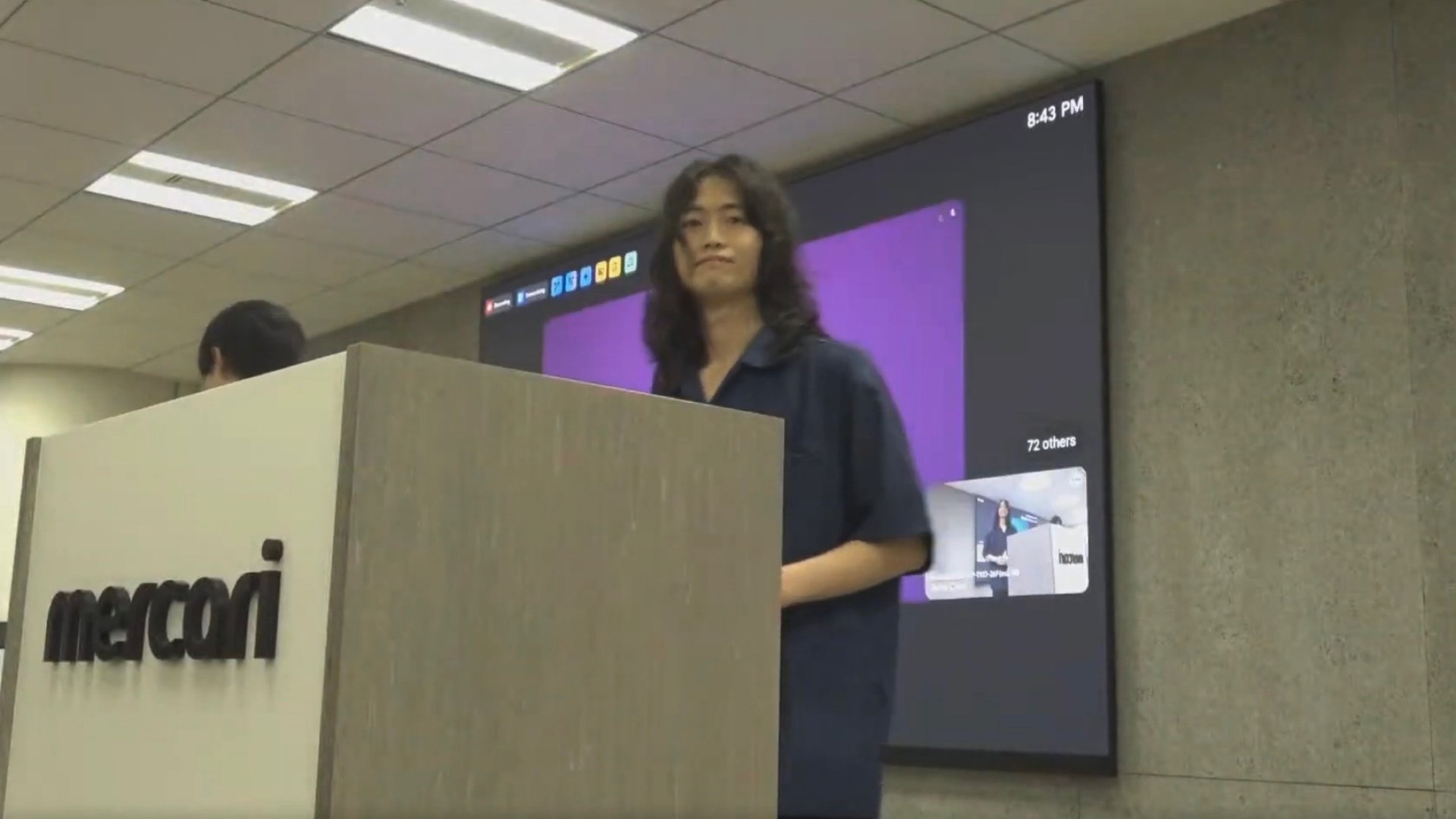
I only noticed where the camera was after finishing my talk — that's me barely managing to turn toward it. There's something a bit melancholy about that expression.
Checking where the camera is matters.
Kotakemu (@Okotakem_ja) from OpenAI was in attendance, so I felt a bit intimidated presenting on this topic — but I went ahead hoping attendees would take at least one thing away with them.
(I had a great chat with Kotakemu at the after-party! He was a very approachable person.)
I had planned to screen-share from my own machine for the slides, but it wasn't cooperating. Nogu (@_nogu66) kindly offered to lend me theirs, and thanks to that I was able to present without a hitch. Thank you so much — you really saved me!
The opportunity to give this lightning talk came from Kuu (@Fumiya_Kume), who also gave me advice on what to present. Thank you!
After the event, my phone battery was critically low and I had no way to get home — then GOROman (Null-sensei) (@GOROman) offered to lend me a mobile battery (also a handheld fan). Thank you so much. Without that charge, I genuinely don't think I could have made it home. (Seriously.) On a side note, the fan blew a seriously powerful breeze — it was incredibly refreshing. It even had a mist spray function. What a gadget.
Presentation Content
I'll briefly walk through what I presented.
My talk was titled "Differences Between the Antigravity and Codex Ecosystems, from the Perspective of a Google AI Student Ambassador."
As the title says, I talked about the differences between the Antigravity and Codex ecosystems.
Premise
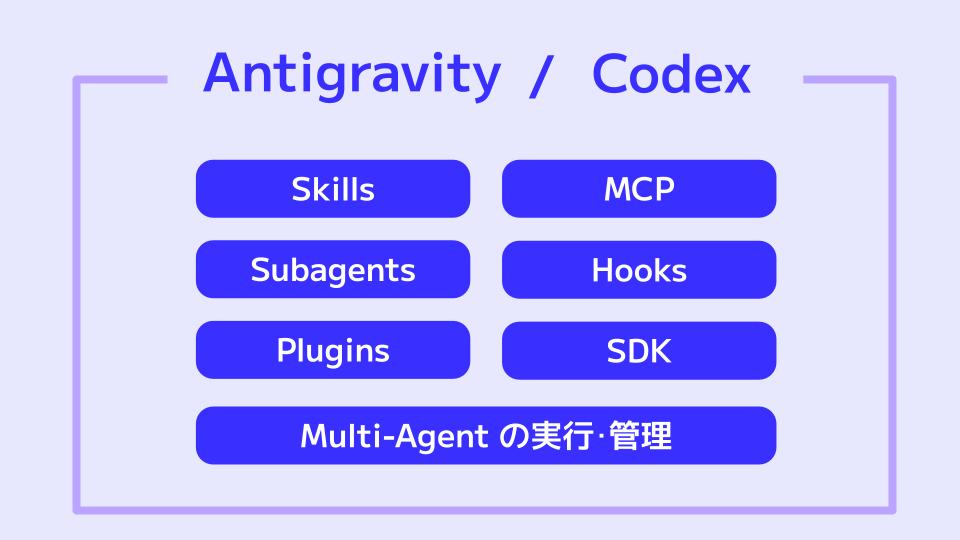
Antigravity and Codex share common features such as Skills, MCP, Subagents, and Hooks. Because of this, a simple feature comparison doesn't reveal much of a difference.
The Challenge
So let's look at the differences between the two by focusing on challenges that can arise when working with multiple agents.
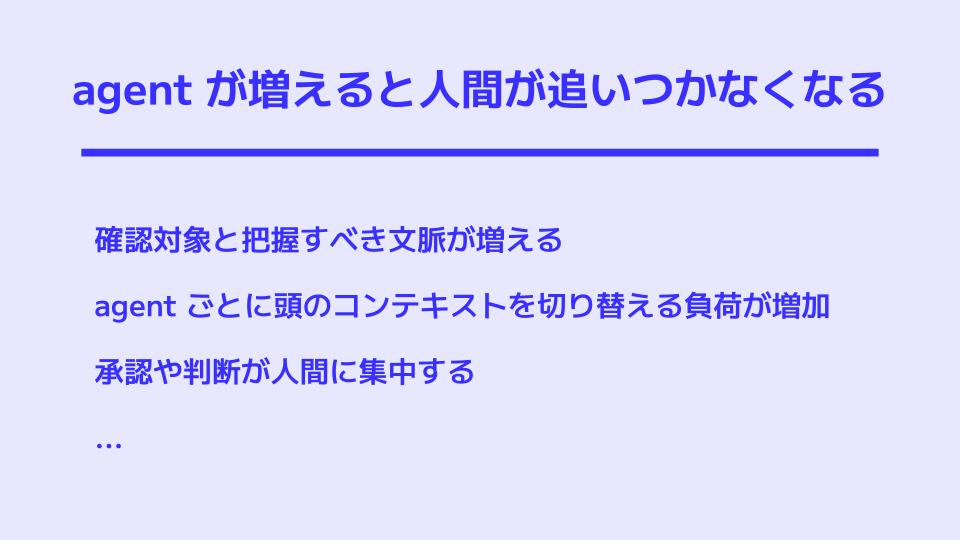
As the number of running agents increases, so do the things you need to check and the contexts you need to keep track of. This makes context-switching in your head and reviewing work the bottleneck.
Each Approach
Let's see how Antigravity and Codex each address this challenge.
Antigravity
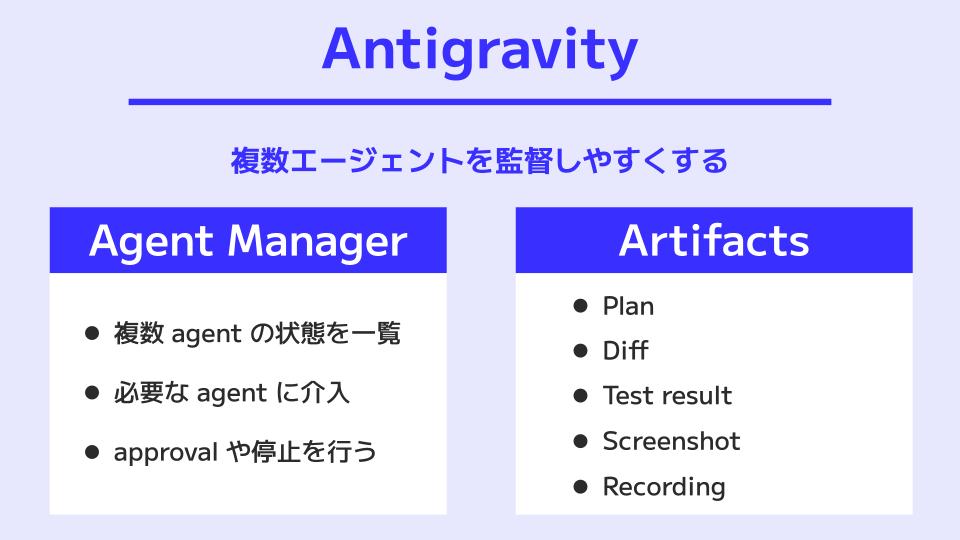
Antigravity takes the approach of making it easier to monitor multiple agents through two mechanisms: Agent Manager and Artifacts.
Agent Manager : Lets you survey multiple agents at a glance and intervene in running ones.
Artifacts : Lets you review plans in a dedicated view, check diffs, and generally see through what agents are doing.
Codex
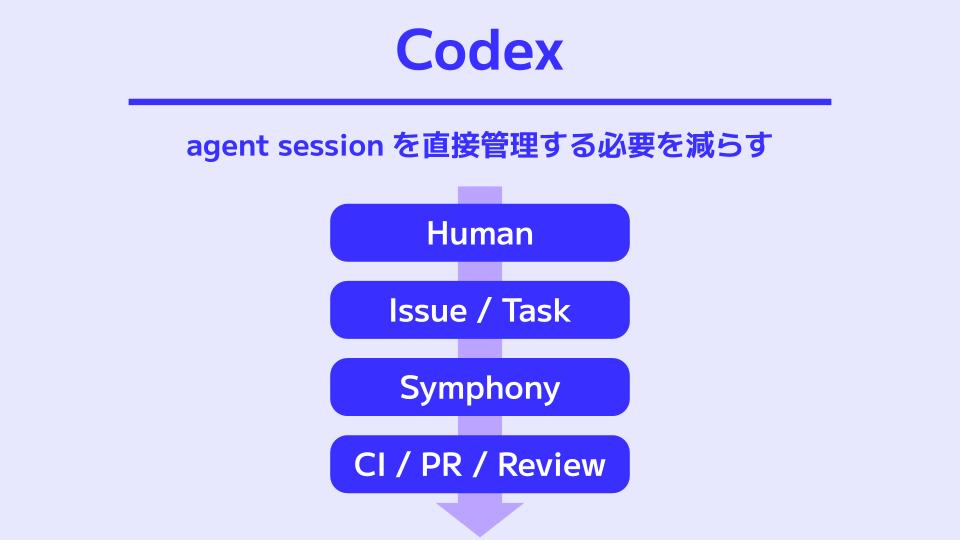
Codex takes an approach that reduces the need for humans to directly manage agent sessions.
Using an orchestrator like Symphony, Codex is driven by Issues and tasks. Rather than managing individual sessions, the idea is to work in units of work.
Comparison
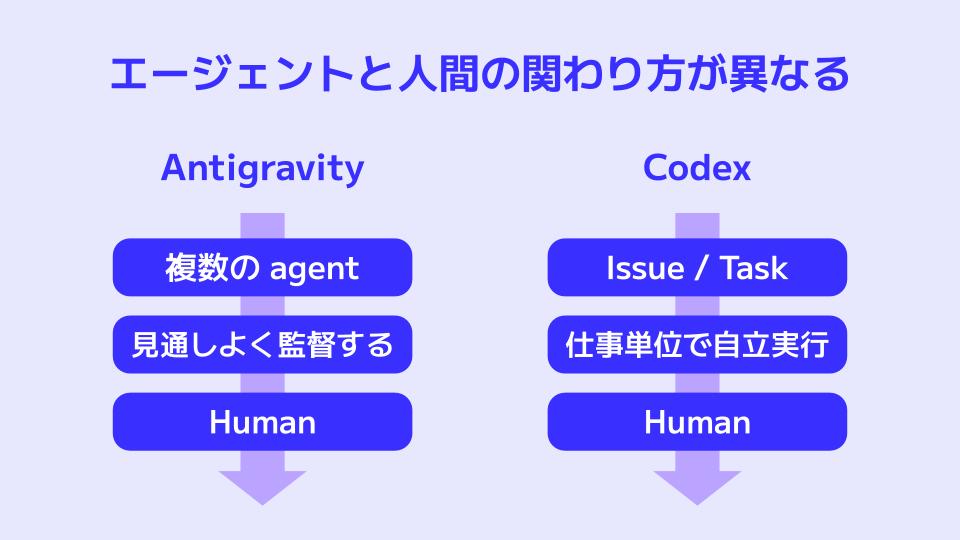
Antigravity helps humans keep track of agent progress, while Codex enables humans to hand off work and verify results.
Summary
The features themselves are quite similar, but the difference lies in how each integrates agents into human workflows. I believe this difference is what characterizes the current Antigravity and Codex ecosystems.